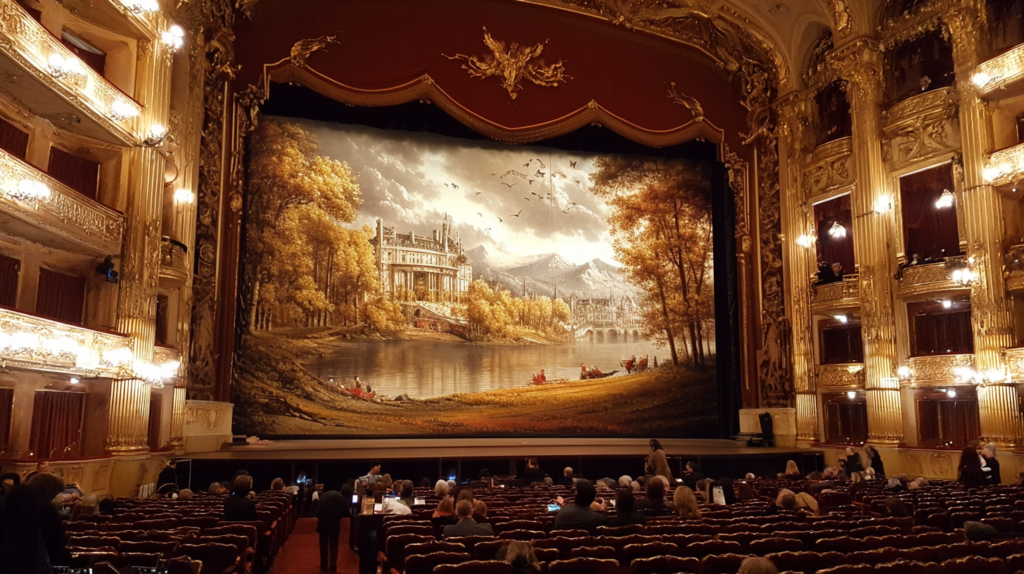
The musical “Kiss in a Castle” is heavily influenced by english “Gothic novels” and also follows the tradition of magical fairy tales. The most famous musical fairy tale is “The Magic Flute” by Wolfgang Amadeus Mozart and Emanuel Schikaneder.
I love “The Magic Flute” and have heard the opera countless times. But where does the story of “The Magic Flute” actually come from?
Between 1786 and 1789, the German poet Christoph Martin Wieland published a collection of stories titled “Dschinnistan.” Dschinnistan is a collection of fairy tales and ghost stories. “Dschinnistan” contains 19 stories, 12 of which were written by Christoph Martin Wieland himself. Wieland’s son-in-law, August Jacob Liebeskind, contributed two stories. One of these stories is titled “Lulu or The Magic Flute.”
Here is a link to the German story: Lulu or The Magic Flute
Here we find many elements that were later used in the opera. A powerful fairy gives a prince a mission. She gives him a magic flute for this task; in the castle of the evil sorcerer, he discovers kidnapped women. He frees them with the help of the magic flute and a magic ring. In the end, the prince and the princess get married.
So much is very similar. However, other elements were significantly altered. The evil sorcerer becomes the wise Sarastro. The fairy becomes the Queen of the Night. Additionally, Tamino must prove his noble character and sincerity through a series of tasks. The elements of Freemasonry and Zoroastrianism were also added to the opera The Magic Flute.
It is fascinating to see how a simple fairy tale became one of the most famous operas in the world.
Readers of the German author Karl May should also be familiar with the name “Dschinnistan.” Between 1907 and 1909, he wrote two books titled “Ardistan and Dschinnistan.”