There is hardly anything more powerful than names. Too esoteric? No, not really. Names are important—very important. Let’s take a very well-known name as an example: “Atlantis.” Plato wrote about Atlantis in the fourth century B.C. The name “Atlantis” is thus nearly 2,400 years old. No historian before Plato ever wrote anything about Atlantis. There are no writings, no artifacts, no buildings, no works of art that could provide even a hint that Atlantis ever existed. All we have are Plato’s writings. Which is more likely: that Plato invented Atlantis, or that Atlantis really existed?
I think Plato invented the legend of Atlantis himself. The legend and the NAME Atlantis are so well chosen that even today people still believe Atlantis really existed.
What does this have to do with the power of names? “Atlantis” is a brilliant name, a name that seems foreign to us and yet somehow familiar.
The Greek “Athens” and “Atlantis”—they go together wonderfully.
Here’s the crucial question: Would the myth of “Atlantis” be so appealing to people if Plato had written about “Prykas”? Honestly, no. No poet, no romantic writer would have written about “Prykas.” The name would have been just one of many that appear in Plato’s “Dialogues.”
Names are important.
There is also hardly anything more exciting than inventing or finding names for stories. The name of a character or a place can even have an impact on the entire story.
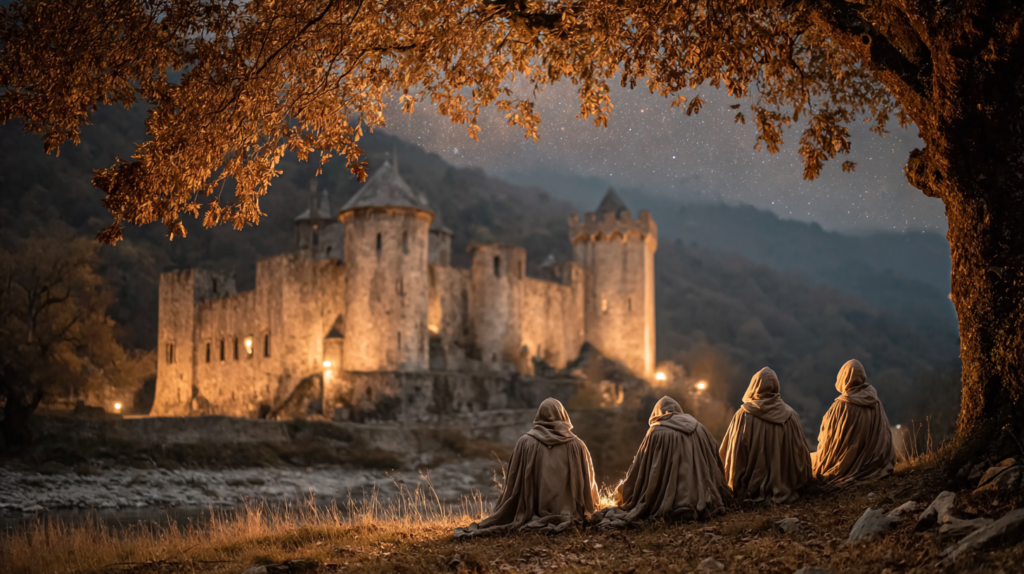
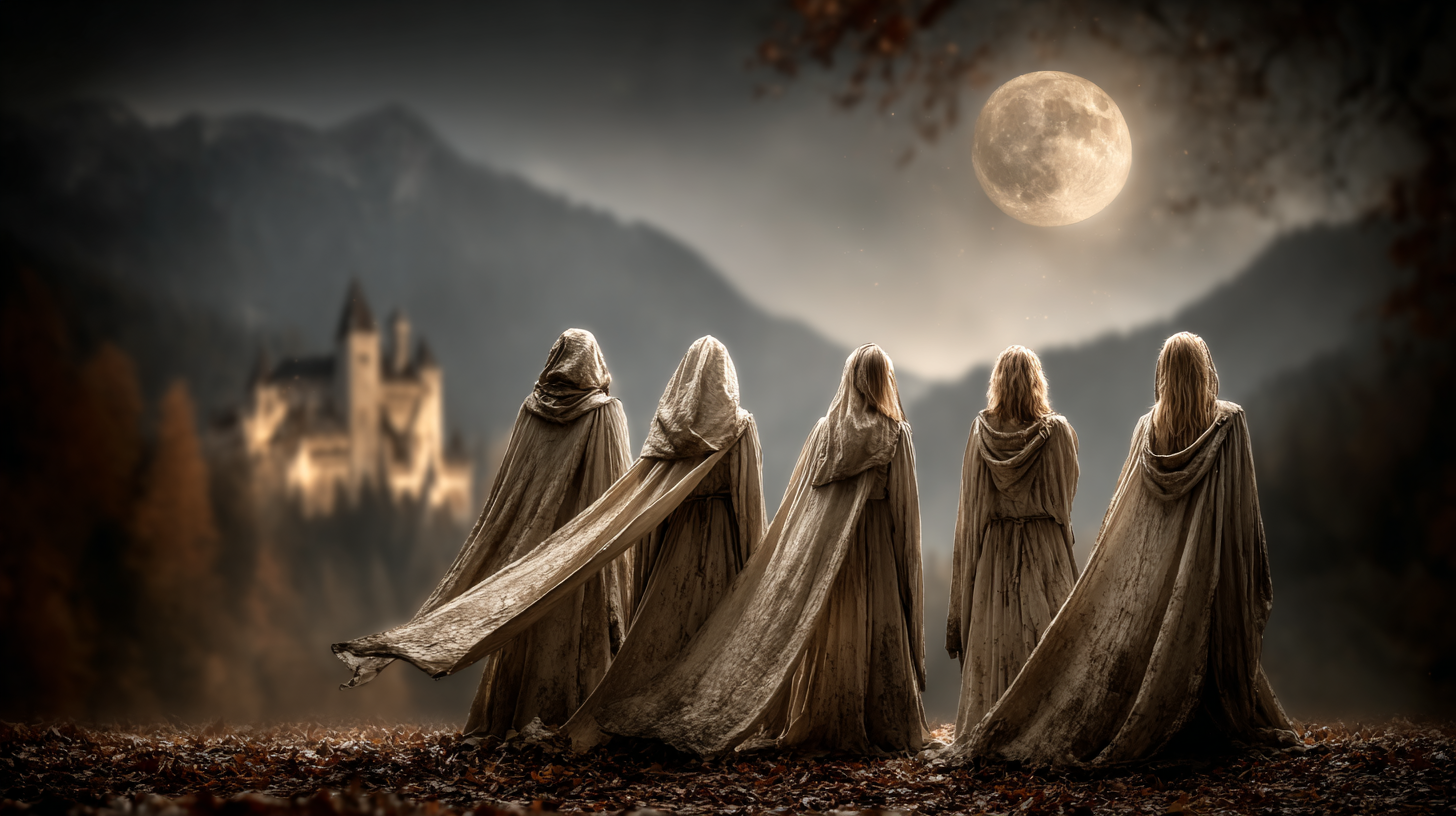
This brings us to the name “Albamira.” How did this name come about? In the musical “Kiss in a Castle,” the color “white” has a special meaning. Here, white stands for evil, for danger.
So the color white was meant to be part of the name. Additionally, it needed a second syllable. This part of the name was also supposed to have a fitting meaning. That’s how the name “Albamira” came to be.
The name is a marriage of two Latin concepts:
Alba (from Albus):
In Latin, this means “white,” “bright,” or “clear.” In Spanish and Italian, it evolved to mean “dawn”—that specific moment when the first white light of the sun breaks the horizon.
Mira (from Mirari):
This is the Latin root for “wonder,” “astonish,” or “behold.” It is the same root that gives us words like miracle, mirror, and mirage. In Spanish, mira is a command: “Look!”
The Literal Translation of Albamira is: “The White Vision,” “The Sight of the Dawn,” or “Behold the White.”
The “White Watch”:
In medieval contexts, a mira or mirador was a watchtower. An ‘Albamira’ would be a “Watchtower of the Dawn,” perhaps a place where knights waited for a prophetic white light or a “white flame” to signal a return.
While there isn’t a “Castle Albamira,” the name fits perfectly into the Spanish landscape for a few reasons:
Altamira Connections:
It bears a phonetic resemblance to the Cave of Altamira in Northern Spain, famous for its prehistoric paintings. Altamira means “High View.” Albamira feels like its sibling—instead of the “High View,” it is the “Bright/White View.”
The “Pueblos Blancos”:
Southern Spain is famous for its pueblos blancos (white villages). A castle named Albamira would fit right into the architecture of Andalusia, where sun-bleached lime walls create a “blinding white” vision against the blue sky.
A “Castle of Love”
In the tradition of L’Amour Courtois (Courtly Love), ‘Alba’ was actually a specific genre of poetry. It described the bittersweet moment when lovers had to part because the “white light” of dawn was appearing.
Albamira, in this romantic sense, becomes “The Vision of Parting,” a castle dedicated to those who love in secret under the cover of night and vanish when the white dawn arrives.
Almira and Alvero
Of course, the name “Albamira” also fits very well with the names of the two main characters, ‘Almira’ and “Alvero.”
The search for the right name took a few days, but it was worth taking the time. Perhaps in the future there will be other legends and tales surrounding Albamira Castle.
“Alhambra” and “Albamira”
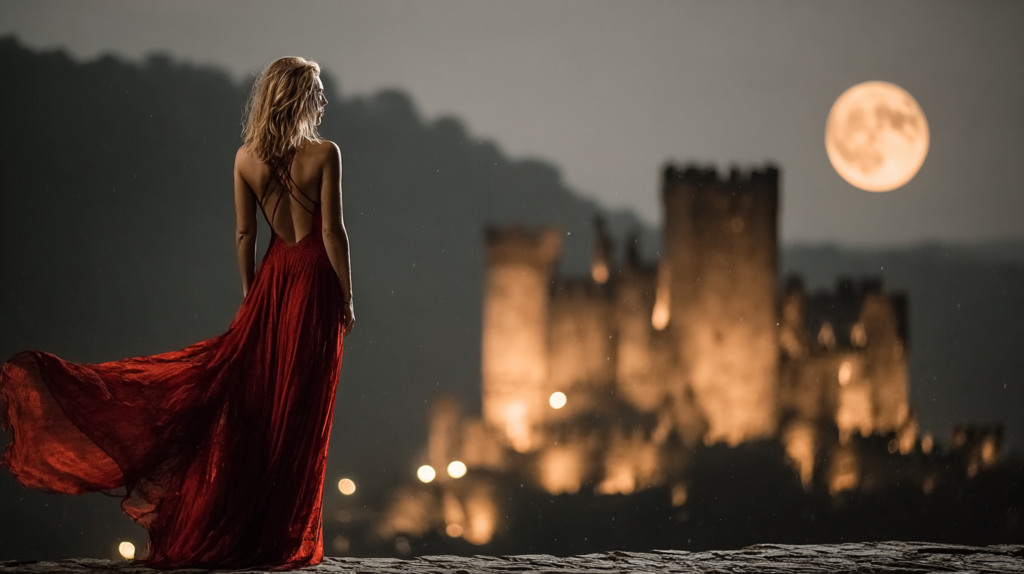
One last connection to the castle. Of course, I knew the name “Alhambra,” the world-famous castle in Spain. The name Alhambra is traced back to Arabic. And here, Alhambra means “The Red Castle.”
Alhambra is the red castle; Albamira Castle is the white vision. They fit together wonderfully.
Names have power. And a bit of magic.